Mizette

HISTORY
At the foot of the medieval village of Monsaraz, nestled among the fields and vineyards of the Alentejo, the small town of Reguengos de Monsaraz serves as the economic hub of this rural region of Portugal.
Behind the whitewashed walls of the workshop, five focused female workers are busy at looms that are hundreds of years old. There were 50 of them in the 1930s.
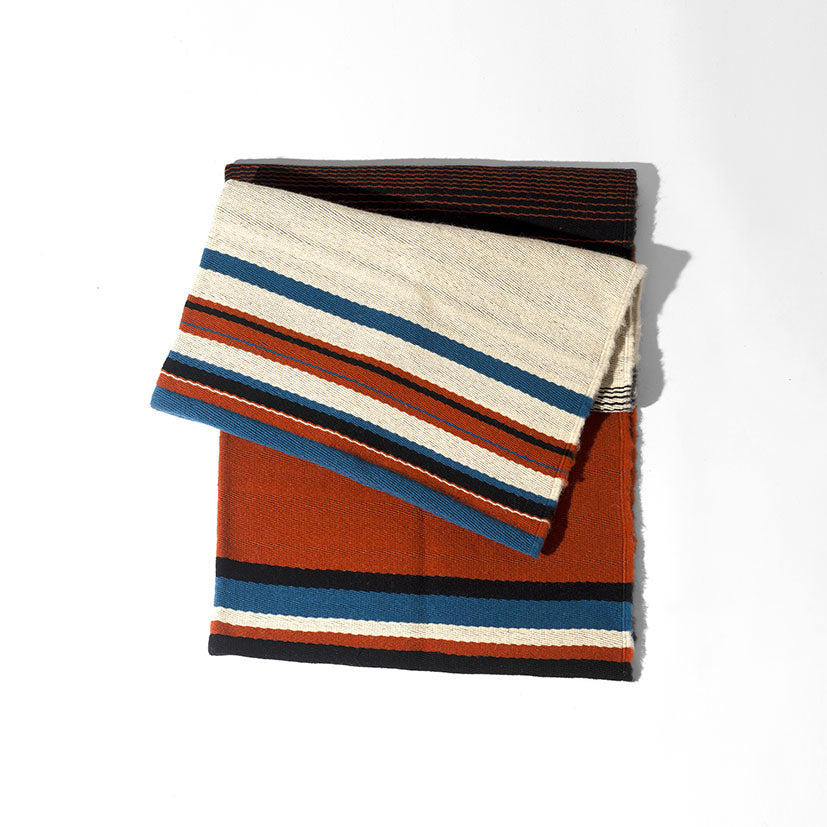
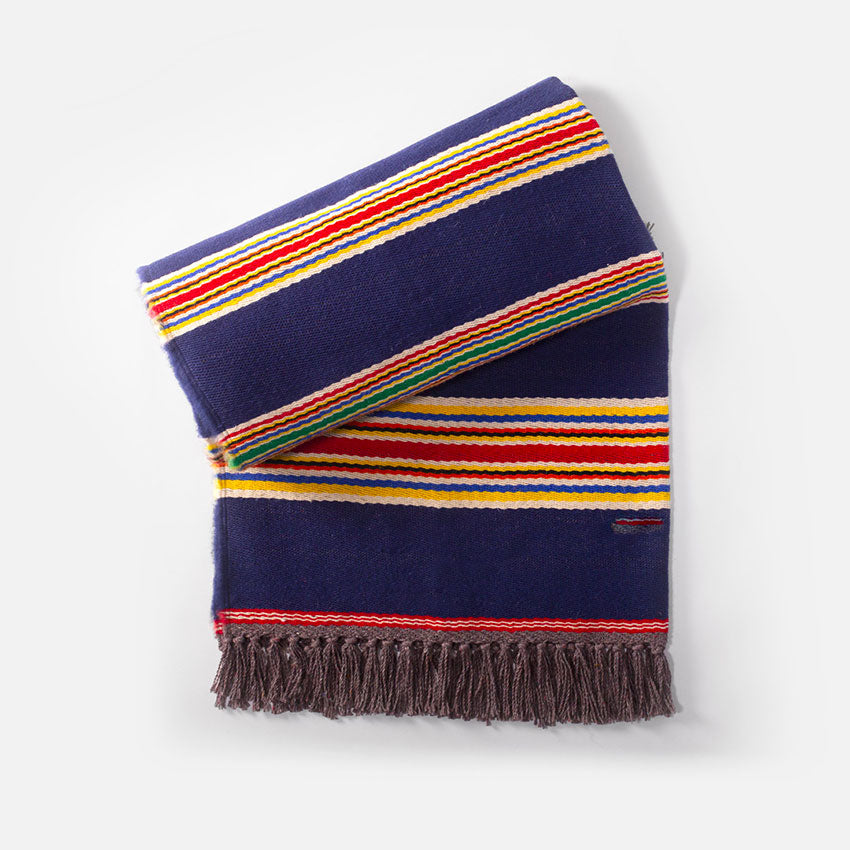
Always the same machines, the same movements, the same jerky noise; the same patterns, the same deep, vibrant colors on these“mantas”(blankets) that shepherds once used to wrap themselves in to protect themselves from the cold.
Mizette, a haughty Dutchwoman who arrived in the 1960s, took over the factory, which had been left nearly abandoned in the wake of the Revolution.
Thanks to her, this adopted heritage—recently passed on to Portuguese entrepreneurs—continues with great enthusiasm: experienced weavers pass on their expertise to younger generations, traditional patterns are enriched with new designs, and“shockingpink”and other new colors are introduced at the request of her customers around the world…
Amid the blue wisps of smoke from her cigarette, which is burning on its own as it sits in the ashtray on her desk, Mizette is reviewing a design commission for a new hotel in the area…