Alain and Stéphanie, strapping operators

HISTORY
In the shade of the blooming linden trees.
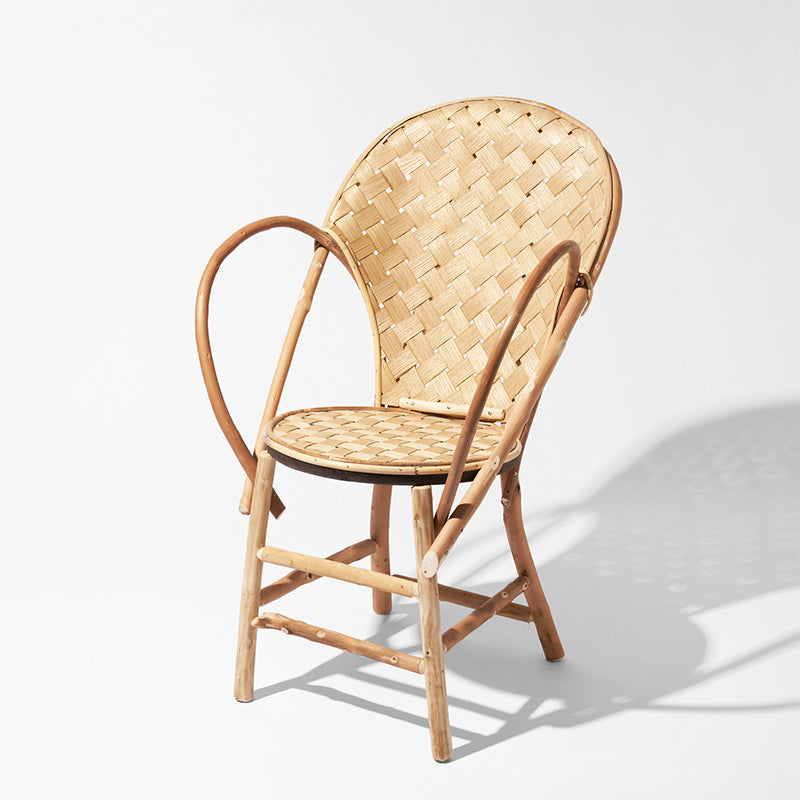
In the garden, under the linden tree where family meals come to an end, in a bedroom by the sea, or in our grandparents’ winter garden, this armchair is what people commonly refer to as a “staple piece of furniture.” First sold in the late 19th century, it was mass-produced in the mid-20th century (in about twenty family-run workshops in the Haute-Vienne region). Popular for the simplicity of its lines, its durability, and the freedom of its forms, it is widely acclaimed for its incredible lightness and the magical powers attributed to it for warding off insects. This made it a hit in French country homes. However, the artisans producing this chair have dwindled in number, and the last remaining ones closed their workshops during the COVID-19 pandemic without any successors coming forward. This craftsmanship, held by the “feuillardiers” who work with chestnut wood in the Limousin region (where the chestnut tree is the symbol), was in peril. We therefore did everything in our power to revive production by connecting artisans and thus ensure the continued manufacture of this armchair, an integral part of France’s cultural heritage.
A craft on the verge of extinction
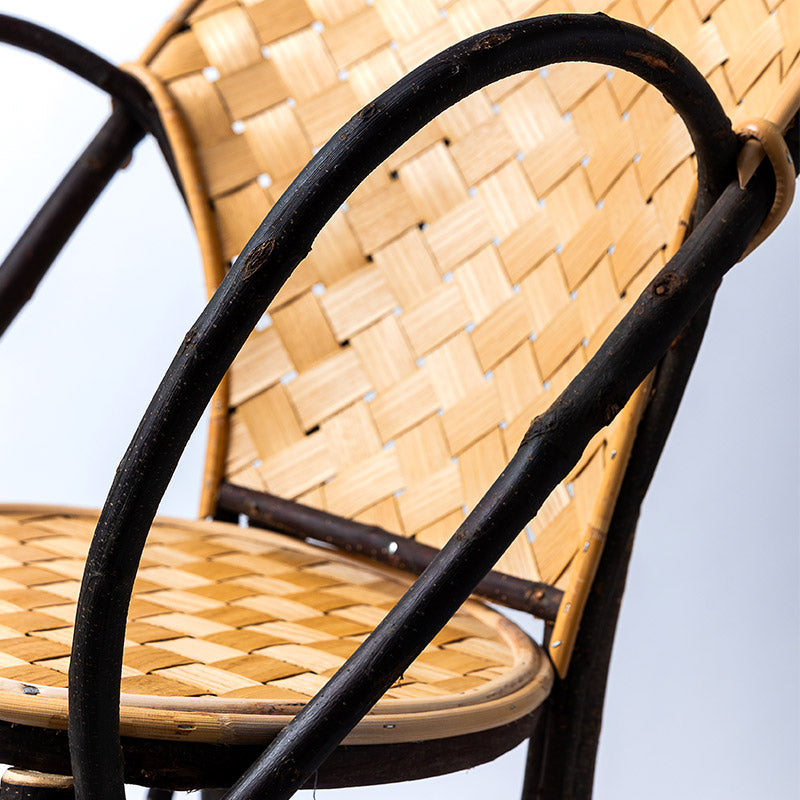
Since the chestnut tree grows in coppice, harvesting is a seasonal, artisanal process to gather the strips and poles, which must then be placed in drying kilns to be softened. This step is necessary to make it easier to strip the bark and shape the wood. The slats for the seats, known as “éclisses,” are produced by a specialized, very old machine, of which only a few examples remain in operation. This iconic chair, which Le Corbusier loved so much, was on the verge of disappearing; our work has helped ensure the preservation of this craftsmanship. Today, the artisans who craft these chairs are training young people who will, in the future, be able to produce this chair themselves, ensuring that it remains an icon for many years to come.