

Portuguese rug

HISTORY
At the foot of the medieval village of Monsaraz, nestled among the fields and vineyards of the Alentejo, the small town of Reguengos de Monsaraz serves as the economic hub of this rural region of Portugal.
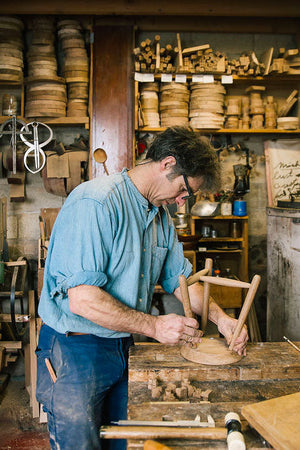
Behind the walls of the whitewashed workshop, five focused workers are busy practicing century-old crafts. There were 50 of them in the 1930s.
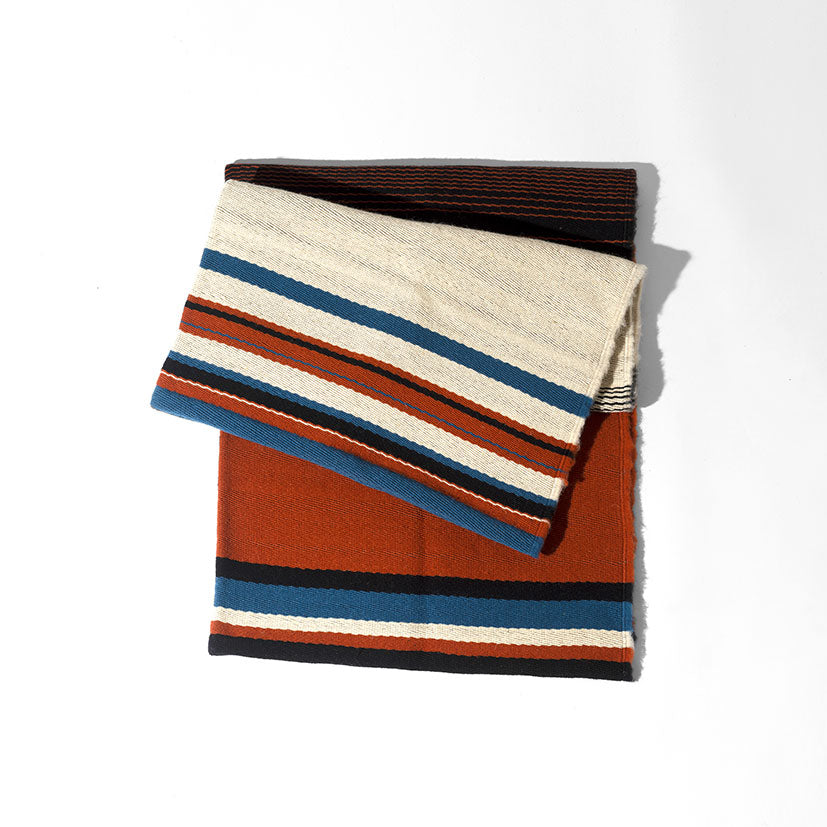
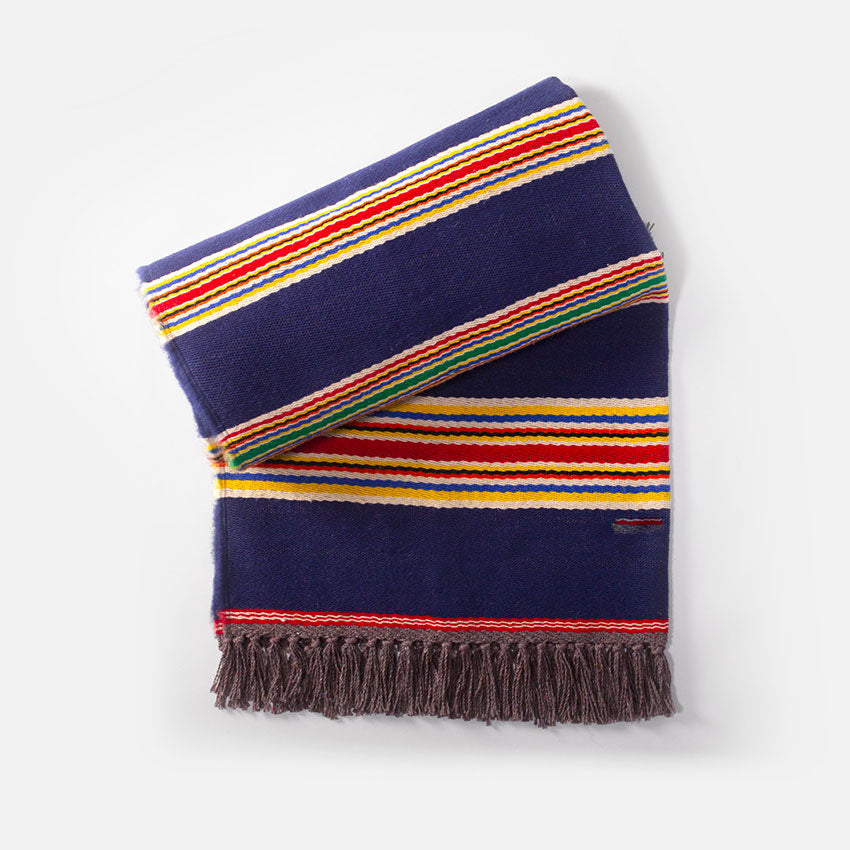
Always the same machines, the same movements, the same chopping noise; the same patterns, the same deep and vibrant colors on these “mantas” (blankets) that shepherds once used to wrap themselves in to protect themselves from the cold.
Mizette, a haughty Dutchman who arrived in the 1960s, took over the nearly abandoned factory at the end of the Revolution.
Thanks to her, this legacy of adoption—recently passed on to Portuguese entrepreneurs—lives on: experienced weavers pass on their expertise to the youngest, traditional patterns are enriched with new designs, and “shocking pink” and other new colors are introduced at the request of her customers around the world…